I am a (dis)abled, queer geographer whose interests lie at the intersections of queer geography, feminist geography, disability studies, energy production, rural sociology, and climate change.
Ongoing Research
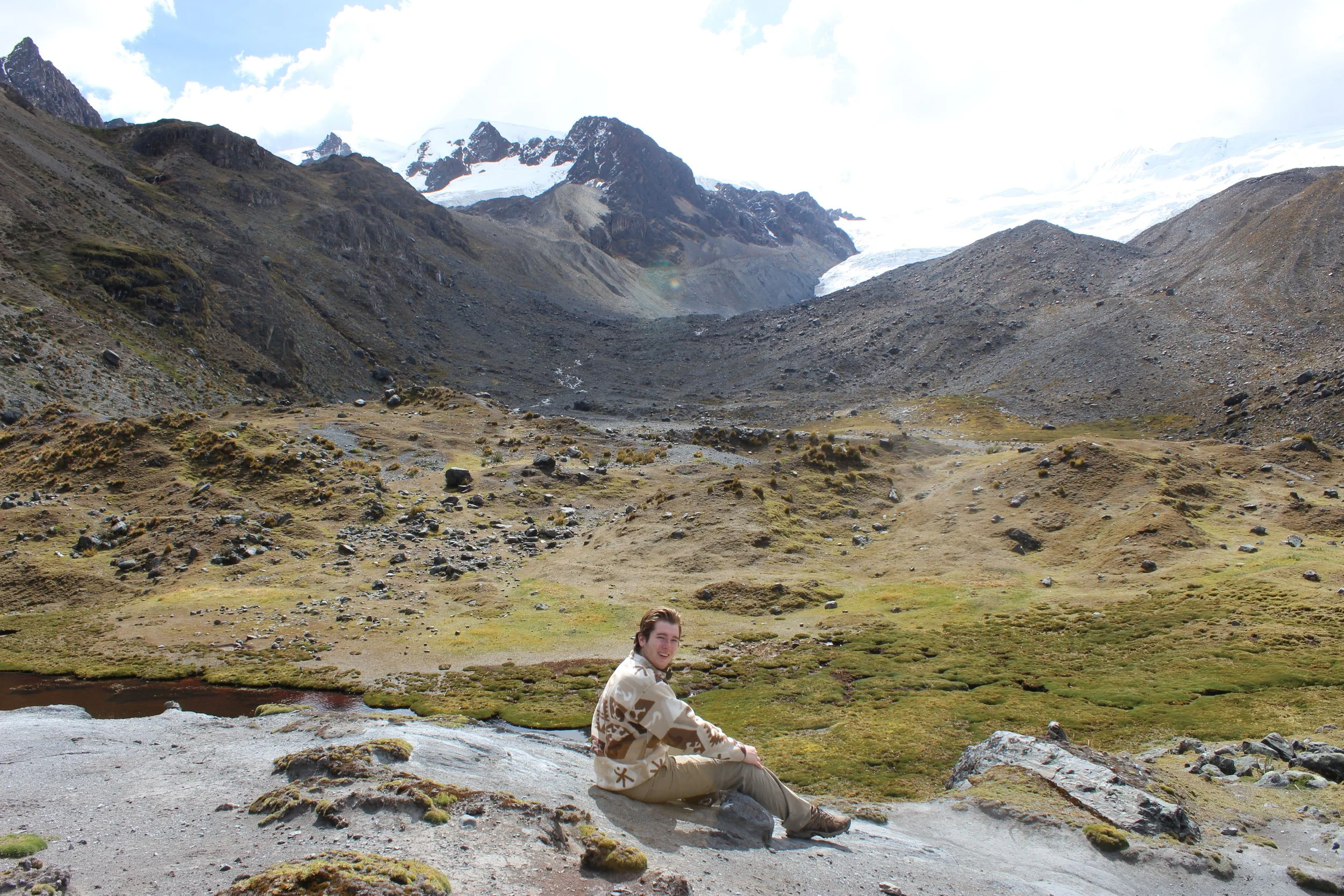
My ongoing dissertation research, built on interviews with over 50 LGBTQIA+ and disabled individuals embedded in social and environmental justice-oriented nonprofit organizations in the Ohio River Valley (Ohio - West Virginia - Kentucky - Pennsylvania), seeks to understand how communities at the heart of natural resource extraction navigate a shifting nonprofit sector and envision just energy futures.
The next part of my research will be body-mapping workshops with the same group of folks to better understand how environmental pollution (whether water pollution in Southwestern PA, chemical manufacturing air-related pollution in Charleston, WV, etc.) impacts LGBTQIA+ and disabled individuals’ health and bodily-wellbeing.
If you identify as LGBTQIA+, disabled, or both, work in the Ohio River Valley at a nonprofit organization (registered 501(c)3), and are interested in being a part of the project, please feel free to email me at Rothrock.17@osu.edu.
Dissertation Research
Intersectional Ecologies: Queer and Disabled Appalachian Perspectives on Health, Environment, and Just Transition
The Rainbow Resilience Research Group, comprised of Dr. Sandy Wong, Dr. Smitha Rao, Dr. Kelsea Best, Dr. Christine Happel, Cyenna Ulrich-Cech, and myself, is a group of interdisciplinary researchers at Ohio State interested in better understanding how LGBTQIA+ individuals in the U.S. can better prepare for climate-related disasters.
Our first project examines how LGBTQIA+ Ohioans are uniquely affected by extreme heat and flooding, alongside related negative health impacts. In Fall 2024, we surveyed 900 LGBTQIA+ Ohioans and found that compared to cisgender men, transgender respondents were particularly vulnerable to flooding and extreme heat. We have also conducted 6 focus groups with Franklin County, OH residents which explored the specific challenges the LGBTQIA+ community faces related to extreme weather, and how they envision more inclusive and equitable disaster recovery and response. More information related to our findings are found in our recent publications in the International Journal of Transgender Health and Population and Environment.
Our second project seeks to understand how LGBTQIA+ community organizations and individuals engaged in queer mutual aid following Hurricane Helene in the Southeastern U.S. This project is a collaborative effort with OUT for Sustainability (OUT4S). If you identify as LGBTQIA+ and were impacted by Helene and a part of recovery efforts in the Southeastern U.S. (North Carolina, Tennessee, Kentucky, Virginia, South Carolina, Georgia, Florida), please consider being a part of our research by reaching out to me at Brandon.rothrock@out4s.org.
The Rainbow Resilience Research Group
LGBTQIA+ Ohioans’ Experiences of Extreme Weather & Queer Mutual Aid Following Hurricane Helene
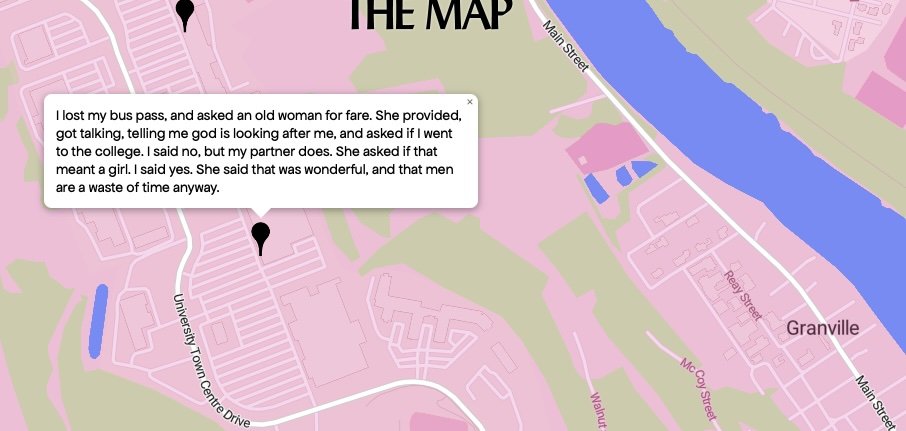
In collaboration with Dr. Nick Koenig (University of Cincinnati), we draw on a systematic analysis of community-contributed posts on Queering the Map (QtM), a digital platform where LGBTQIA+ identifying people geotag personal narratives to specific places, to produce a counter-mapping of queer life in the Appalachian South.
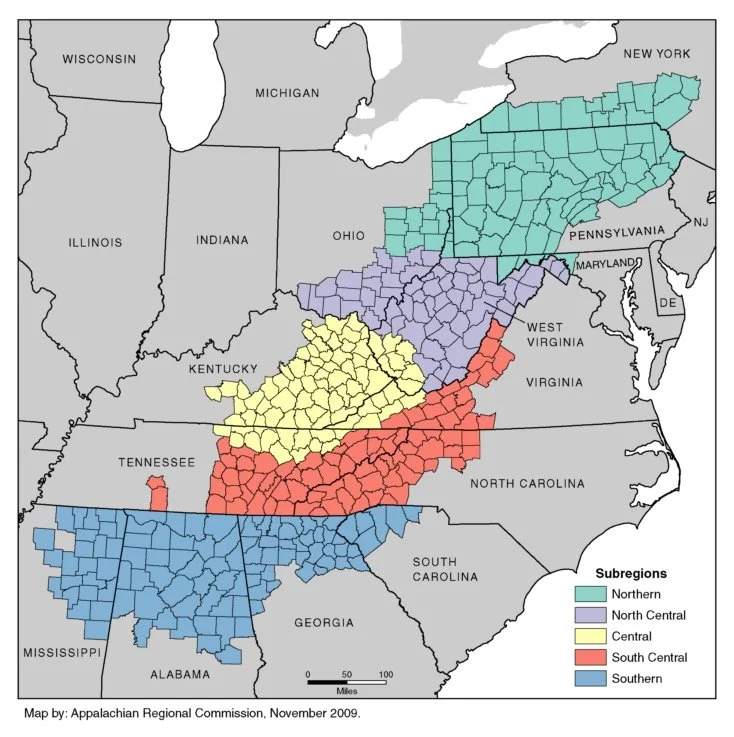
We are in the midst of analyzing over 3,000 individual pins from the Appalachian Regional Commission (ARC) Appalachian counties map across the following states: Mississippi, Alabama, Georgia, South Carolina, North Carolina, Tennessee, Kentucky, Virginia, and West Virginia. Our analysis also incorporates data from the Rural Urban Continuum Codes and LGBTQIA+ related laws through the Movement Advancement Project.
Our research is ongoing and will be featured in the Queer South Special Issue of The Southeastern Geographer in Summer 2027.
Queering the Map
Pinned Places: A Counter-Mapping of Queer Appalachian Life through Queering the Map (QtM)
Climate change will create differentiated vulnerability across identity categories such as race, class, and sexuality. LGBTQ+ persons in particular face heightened vulnerability and insecurity during climate disasters on the basis of their sexual orientation, gender identity, and gender expression. The experiences of LGBTQ+ persons and climate change are further embedded in the overarching issues of climate skepticism and denial in the United States, which are further amplified in Appalachia. Despite decades of socioeconomic decline and environmental deterioration at the hands of the extractive industry, a regional coal identity remains, often producing anti-environmental sentiments among rural residents who feel that national environmental policies are enacted in opposition to their livelihood and identity.
My MA Geography thesis explored LGBTQ+ undergraduate students’ perceptions of climate change and the environment in relation to their upbringing and sexual and place-based identities at six large, state universities in Appalachia. A copy of my thesis can be found here.
MA Geography, West Virginia University (2021)
Sexual and Place-Based Identity: A Life Course Analysis of LGBTQ+ Undergraduate Understandings of Climate Change in Appalachia